5 min read
Posted
Thursday, August 28, 2025
at 11:00 AM ADT
Posted by
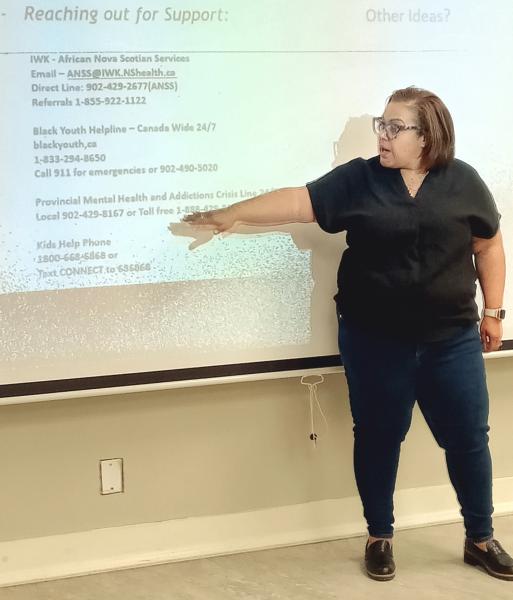
In the heart of Lucasville, a youth wellness project is transforming the Wallace Lucas Community Centre into a vibrant hub where students don’t just talk about mental health - they own the conversation.
Last spring, through hands-on education, shared experiences and community connection, young people found their voices, parents found support and wellness found a new home. With healthy food, life skills and open dialogue, the project is changing habits - and lives.
The Cobequid Community Health Board awarded more than $3,000 toward the Lucasville Education Committee Society’s youth wellness program.
Community health board wellness funds support non-profit groups working to improve health in their communities. Among other things, grants go toward programs that promote food security, housing, transportation and social participation. The goal is to reduce risks of poor health outcomes in Nova Scotia communities.
The community health board grant helped pay for supportive materials and advertising for the Halifax County non-profit.
“We were thinking about how the wellness initiative could work with students, both in schools and in the broader community,” said Cindy Parsons, one of the society’s directors. “We asked ourselves: How can we bring youth into the Lucasville community and start conversations around what wellness really looks like? Had they ever thought about how they feel, even in just a few moments? Or who they might reach out to if they needed support? That’s how I became involved.”
Mental wellness for many adults remains a steep learning curve, so, the ability to understand one’s own mental health at an early age can be empowering for children, students and young people and can inform prevention avenues, said Mary Tench, another director of the society.
“For families, it creates talking points and strategies to help us relate to each other, even though our teenage years were so different because of the times we grew up in,” Tench added. “Personally, my children have had their own struggles, and I experienced challenges growing up too. But back then, no one talked about mental health. We didn’t have access to that kind of support. That’s why I think it’s beautiful that our youth are gaining this knowledge - it could help them grow up healthier than many of us did.”
Parsons said it was typical to keep awareness of someone struggling with their mental health inside the home, out of public view. But the narrative is shifting as people are talking more openly and using shared language to better understand individual positions.
The program began with about a dozen junior-high age young people participating. Parents also took part. A guest speaker from the healthcare sector with expertise in the field of mental wellness presented.
Tench and Parsons said results were powerful.
“Children were talking; parents were talking,” Parsons said. “We were actually having conversations about what mental health looks like, how it feels and how to navigate it. It became a truly meaningful platform for all of us.”
Inspired by the society’s work, Tench highlighted how important the program is for guiding young people.
“They are absorbing so much, yet feeling isolated, like no one is really listening and, when they look at today’s world in terms of the political and economic environment, it can be easy for them to feel despondent about the future,” Tench explained. “They’re already struggling to make sense of their changing bodies, surging hormones and rapidly developing minds.
“They need tools and tactics to steady themselves through the rough patches. They need to know they’re not alone; that there’s community, family and friends. They are empowered and we’re here to walk with them through this. That’s what makes this work so vital.”
Parsons and Tench would love to see the program spin off into more peer-led and healthy living aspects. Both said some of the young people enjoyed the exercise and physical activity aspects, while others gravitated toward music or art activities.
“We’ve already laid the stepping stones from where we began to where we are now and that progress is meaningful,” Parsons said.
Photo of, in the heart of Lucasville, a youth wellness project transforming the Wallace Lucas Community Centre into a vibrant hub where students don’t just talk about mental health - they own the conversation.