5 min read
Posted
Tuesday, July 29, 2025
at 1:54 PM ADT
Posted by
Categories
Routine IT maintenance on Wednesday, December 17 will cause service interruptions between midnight and 6:00am affecting the YourHealthNS app and on-line appointment booking including COVID-19 testing, blood collection, X-Ray, EKG and the Need a Family Practice Registry. We apologize for any inconvenience.
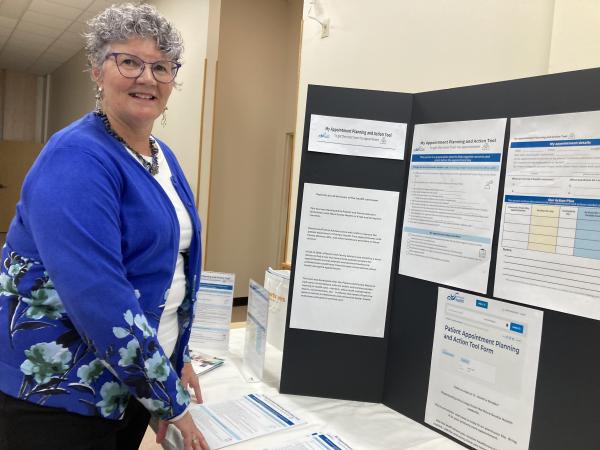
When patients arrive at appointments feeling organized and confident, care becomes more effective, conversations become clearer and outcomes improve.
That’s the idea behind the newly created Patient Appointment Planning and Action Tool, a resource designed to help patients prepare for their visits, take an active role in their care, and leave with a clear understanding of next steps.
The two-page tool guides patients through the key information they need before, during and after an appointment. It includes space to record appointment details, note top health concerns, and keep track of agreed-upon actions. Following these simple steps helps patients, caregivers and providers stay on the same page.
“This tool gives patients more agency and empowers them to take control of their health,” says Dr. Alison Wellwood, a family physician at the Wolfville Collaborative Family Practice. “When they come prepared, we can focus on care and make sure they leave with what they need.”
The idea began with a conversation between Wellwood and Nancy McBay, a patient family advisor. After one of McBay's first meetings with the Wolfville team, the two started discussing how patients could be more actively involved in their care.
“I told (McBay) I wanted to work with patients to help them feel more confident and supported in appointments,” Wellwood said. “They should be able to advocate for themselves and get the best care possible.”
McBay saw the potential right away. “When a healthcare provider like (Wellwood) says, ‘I have an idea,’ I always listen,” she said. “She truly cares about her patients. I trusted her, and I knew this would be a valuable project.”
With support from Leanne Graham, health services lead, and the Annapolis Kings primary healthcare patient family advisors, the idea took shape in fall 2023. They gathered input from staff at two primary healthcare practices, social workers, the Family Practice Network and community organizations.
“From my past experience in healthcare, I knew it was important to engage the people who know what patients need day to day,” Graham said. “That mix of perspectives really helped us get it right.”
The final product is simple but practical. Patients can fill in their appointment details, keep track of everything they need to bring or do before their appointment, list their top two concerns and bring the tool with them to stay on track. During the visit, they can use it to take notes and record next steps for both them and their provider, which provides clarity about what needs to happen after their appointment.
“I think every patient should come prepared to take notes,” Wellwood said. “And while some people will track their health using technology, others need a paper-based option. The important thing is having something that supports them to be active participants in their health.”
The tool can also be used by caregivers who support others with their care. Graham recalled one caregiver who filled out the tool with her elderly father. “She usually went with him to every appointment. But after using the tool once, he felt confident enough to go on his own,” she said.
Even in its early stages, the tool has been well received. McBay and Graham introduced it at a seniors expo and found that nearly every attendee stopped to learn more.
“Some people even came back later for deeper conversations,” Graham said. “It really resonated with caregivers who are managing someone else’s appointments.”
Community organizations also expressed strong interest, noting they’d been using sticky notes and scraps of paper to help people stay organized. “They were really enthusiastic and saw a huge need for something like this,” McBay said.
The working group learned that patients often face barriers that lead to missed appointments such as transportation challenges, misplaced paperwork or unclear expectations. These issues can also create strain on clinic staff and providers.
“We wanted the tool to help both patients and clinics get more out of each appointment,” McBay said. “And we knew it had to be something that wouldn’t add to the administrative workload.”
The tool reflects a growing focus on shared responsibility in healthcare, encouraging patients to be engaged while supporting providers in delivering more focused, efficient care.
“You can be your own best self-advocate if you keep track of your health,” Wellwood said. “As providers, we should be encouraging that.”
McBay agreed: “Better prepared, better informed, better organized equals better outcomes.”
The Patient Appointment Planning and Action Tool is available for anyone to use. Whether you’re a patient, caregiver or provider, it’s a simple way to support more effective, person-centered care. You can download the tool here.
Photo of Nancy McBay.