3 min read
Posted
Thursday, June 18, 2026
at 11:03 AM ADT
Posted by
Categories
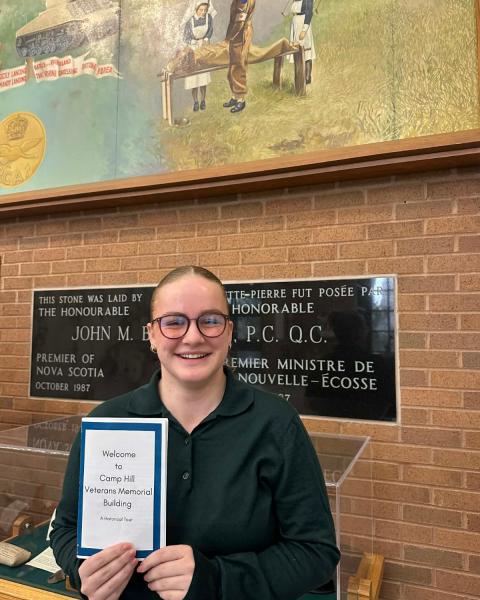
In the hallways of Camp Hill Veterans Memorial Building, history lives quietly on the walls, in photographs, artifacts and spaces that hold decades of stories.
For Dalhousie University recreation therapy student Jordyn Wolfer, those stories have become an opportunity to bring people together.
During her placement, Wolfer developed a walking tour and companion pamphlet designed to help residents, families and staff connect not only with the building’s history, but with each other.
“It’s about taking what already exists in the building and using it in a therapeutic way,” she says.
The tour highlights artifacts on the first and second floors, each paired with historical context, photos and “did you know” facts. Used as a one-on-one recreation therapy intervention, it supports conversation, connection, and reminiscence, offering visual cues to help residents recall memories and share their stories.
“It’s an opportunity to build rapport and support that sense of community within the building,” Wolfer says. “It helps people feel more connected to where they are.”
At Camp Hill, where many residents are veterans with deep ties to military history, that sense of connection carries added meaning.
“I’m not originally from Nova Scotia, so learning about the military and its connection to Halifax is really interesting,” she says. “What stands out most is seeing how much the community supports Camp Hill and the veterans who live there.”
The project was shaped through collaboration with recreation therapy staff, leadership and others with deep knowledge of the building’s history. Together, they identified key pieces to include, while Wolfer ensures a balance of murals, artifacts, photographs and meaningful spaces that reflect Camp Hill’s story.
After trial runs with members of the interdisciplinary team, staff across different roles saw how the tour can support their work, from introducing new residents to the space to enhancing existing walking programs.
“It feels really good to hear people say, ‘I can use this in what I do,’” Wolfer says.
As her placement comes to a close, Wolfer focuses on ensuring the project continues to benefit others. All materials remain accessible to staff, allowing the tour to be used in ongoing care and engagement.
For Wolfer, the impact lies in the moments the tour can create.
“I hope people complete the tour feeling positive,” she says. “That they’ve had a good experience and feel more comfortable in the space.”
Reflecting on her time at Camp Hill, she describes an experience that is both professionally and personally meaningful.
“I honestly loved every second of it,” she shares. “The staff are so supportive, and getting to know the residents and veterans, and knowing you can have a positive impact on them, is really special.”
In a place shaped by history, her walking tour helps create something just as important: moments of connection, belonging and care.
Photo of Jordyn Wolfer.