4 min read
Posted
Monday, October 5, 2026
at 11:57 AM ADT
Posted by
Categories
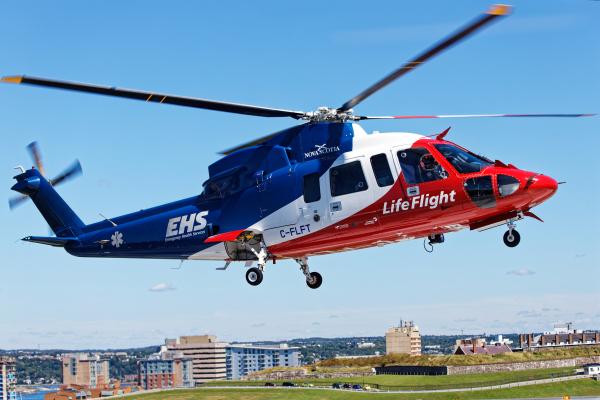
For patients arriving by air, the journey to specialized care can begin long before they reach Halifax.
A new heliport taking shape as part of the QEII Halifax Infirmary Expansion Project will replace the existing heliport, providing a modern, future-ready facility to support EHS LifeFlight air ambulance arrivals from across Nova Scotia and beyond.
The existing heliport has served the QEII well for many years, but its age and limitations mean it is no longer ideally suited to the needs of a major trauma and referral centre. The new heliport is being designed to address those challenges while anticipating the future needs of air ambulance operations.
But designing a heliport for a hospital providing complex and specialized care involves much more than creating a safe place for an aircraft to land.
“The heliport is being designed around the needs of the hospital and the patients it serves,” said Shane Todd, heliport manager, and chief power engineer with Nova Scotia Health. “There are a lot of considerations that go into making sure an aircraft can arrive safely and that the patient, crew and care team can transition smoothly into the hospital.”
Once a patient arrives, the destination could be the emergency department, an operating room, intensive care or cardiac services often for conditions when time is critical.
The heliport is being planned with these clinical pathways in mind, supporting the movement of patients into the hospital and toward the care they require.
That means the design has to account for much more than the aircraft itself.
“There’s a lot more to a heliport than what you see from above,” said Todd. “Lighting, navigation, structural requirements, weather conditions, safety systems and patient movement all have to be considered together to create a facility that can support patient care 24 hours a day.”
The new heliport will also be designed to accommodate newer and heavier air ambulance aircraft, helping future-proof the facility as airframes and transport requirements evolve.
The project also provides an opportunity to improve the experience for the air crews who support patients arriving at the QEII. The heliport penthouse will include a dedicated break room and washroom for crew members.
Because the pilot cannot leave the aircraft when it arrives, having these amenities available within the heliport facility is an important improvement.
The heliport will strengthen an important connection between communities across the province and specialized care in Halifax.
EHS LifeFlight provides critical care and transport for patients from communities throughout Nova Scotia, including those who require urgent access to trauma, cardiac, stroke and other specialized services available at the QEII.
For patients in rural and remote areas, geography can be a significant factor in accessing that care. Air transport can shorten the distance and time between a community and the specialized services available at the QEII, making the heliport an important part of the province's broader healthcare network.
“Nova Scotia has a unique geography, and air transport plays an important role in connecting patients with specialized care,” said Todd. “The new heliport is being designed to support that connection and provide a reliable point of arrival for patients coming to the QEII.”
Photo credit Shane Todd, Heliport Manager: A new heliport at the QEII Halifax Infirmary is being designed to provide a modern, future-ready arrival point for EHS LifeFlight patients from across Nova Scotia.