3 min read
Posted
Wednesday, May 13, 2026
at 1:30 PM ADT
Posted by
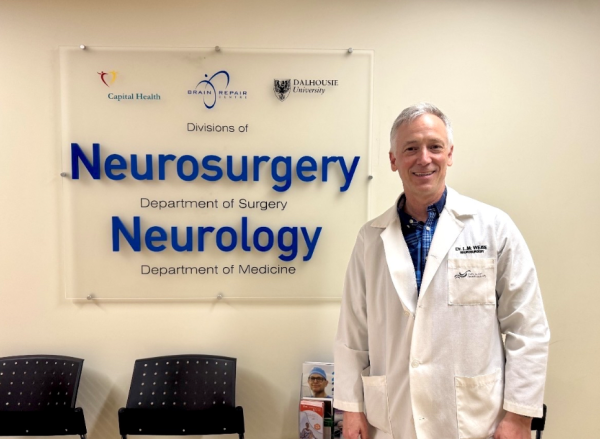
Nova Scotia Health is proud to be rolling out another ‘first in Canada’ surgical tool, this time introducing a next-generation device that improves the safety and comfort of patients undergoing Deep Brain Stimulation (DBS) — a life-changing treatment for Parkinson’s disease, essential tremor, and other movement disorders.
The new device, The Leksell Vantage Frame, developed by Swedish medical technology company Elekta, helps surgeons perform highly precise brain procedures, supporting safer surgeries, shorter procedure times and better outcomes.
“This new frame allows us to provide patients with safer, faster, and more effective care,” said QEII Health Services Centre neurosurgeon Dr. Lutz Weise. “It improves precision down to a tenth of a millimetre — and that level of detail makes a significant difference in delicate brain surgery.”
Improving precision and patient comfort
Deep brain stimulation requires exact targeting within the brain. The Leksell Vantage Frame uses advanced 3D guidance to help surgeons reach those areas with greater accuracy while minimizing impact on surrounding tissue.
Since its introduction in 2025, the technology has already been used in more than 35 procedures, reflecting both the need for this treatment and the confidence care teams have in the system.
The design also improves the patient experience. Unlike older models, the open-face frame allows patients to see and communicate more easily during awake procedures, reducing anxiety and helping care teams monitor breathing and comfort.
Supporting efficient, modern care
The system also streamlines surgical workflows. With fewer components, it simplifies setup and sterilization, helping teams work more efficiently and supporting Nova Scotia Health’s broader efforts to modernize care.
This advancement strengthens access to specialized neurosurgical care in the province and reflects a continued focus on innovation and patient-centred care.
“Greater precision means less disruption to healthy brain tissue,” said Weise, who is also an associate professor of neurosurgery at Dalhousie University. “That translates into safer surgeries and more predictable recoveries, which is exactly what patients and care teams want.”
For patients living with movement disorders, innovations like this help deliver safer care and better outcomes—closer to home.
Photo of Nova Scotia Health neurosurgeon Dr. Lutz Weise.