4 min read
Posted
Tuesday, May 26, 2026
at 3:25 PM ADT
Posted by
Categories
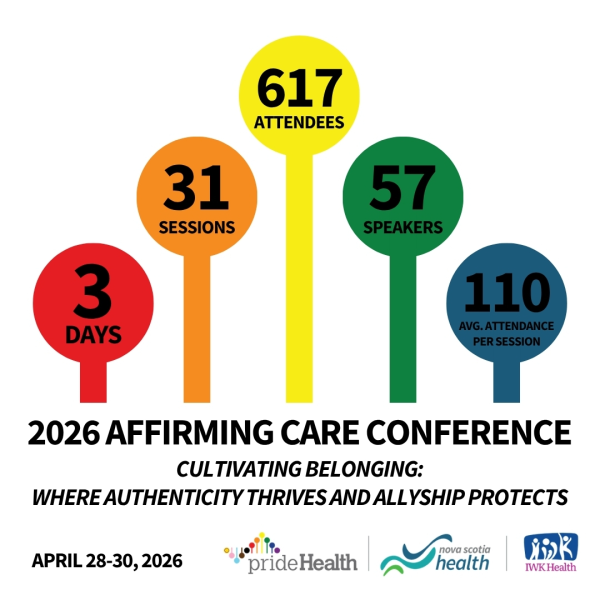
Nova Scotia’s 2026 2SLGBTQIA+ Affirming Care Conference brought together more than 600 health professionals, community advocates and system leaders this spring for three days of learning and conversation focused on creating safer, more inclusive healthcare environments for 2SLGBTQIA+ communities.
Hosted by prideHealth in collaboration with Nova Scotia Health and IWK Health, this year’s conference centred around the theme “Cultivating Belonging: Where Authenticity Thrives and Allyship Protects.” Across 31 sessions led by 57 speakers, participants explored how healthcare providers and organizations can create spaces where people feel seen, respected and safe.
The conference welcomed 617 attendees, with sessions averaging more than 110 participants each. Physicians, nurses, allied health professionals, researchers, health system leaders and community advocates joined from across Nova Scotia and beyond to learn practical strategies for providing affirming, culturally safe care.
One of the conference’s many memorable presentations came from Jenna Kedy, a 21-year-old healthcare advocate and youth advisor, whose session “Youth, Bisexuality and Healthcare: What I Need My Care Team to Know at 15” offered a powerful lived experience perspective on navigating healthcare as a bisexual young person.
Throughout her presentation, Kedy spoke candidly about the choices many youth make in healthcare settings, weighing whether it feels safe to answer questions honestly about their identity. “I stopped asking myself what was the honest answer,” Kedy said during the session. “I started asking myself what is the safest answer?”
Assumptions, confidentiality fears and unintended moments of invalidation can shape whether young people fully engage in care. Kedy emphasized that creating safety within healthcare settings is not just about policies or procedures, but also language, tone, body language and the overall environment patients experience. “When safety is present, everything else becomes easier,” she said. “A safe environment will help your patients be more honest with you. And when they’re more honest with you, you have the ability to provide better care that’s more holistic and better informed.”
Another session, “Sex Work is Work: Providing Inclusive Care” by Dr. Val Webber and Jonathan Mansvelt from Dalhousie University’s Sexual Health and Gender Research Lab, explored barriers sex workers face when accessing healthcare, including stigma, assumptions, confidentiality concerns and fear of judgment.
Speakers highlighted how assumptions can affect whether people feel safe seeking care or disclosing important information to healthcare providers. The session encouraged participants to reflect on implicit bias and challenged stereotypes about sex work, emphasizing the importance of person-centred, low-barrier approaches to care.
Sessions throughout the conference explored a wide range of intersectional topics affecting health and wellbeing, including housing insecurity, newcomer sexual health, gender diverse youth care and policy change within Nova Scotia healthcare systems. Several presentations also focused on creating more inclusive systems and practices, including sessions on gender inclusivity policy development at IWK Health (view the policy here), inclusive language and immunization access, and organ and tissue donation.
The free virtual event was open to all Nova Scotia Health and IWK Health staff. As the conference continues to grow each year, organizers say the conversations created through the event are helping strengthen a more inclusive healthcare system for 2SLGBTQIA+ communities across Nova Scotia.