6 min read
Posted
Monday, September 14, 2026
at 12:03 PM ADT
Posted by
Categories
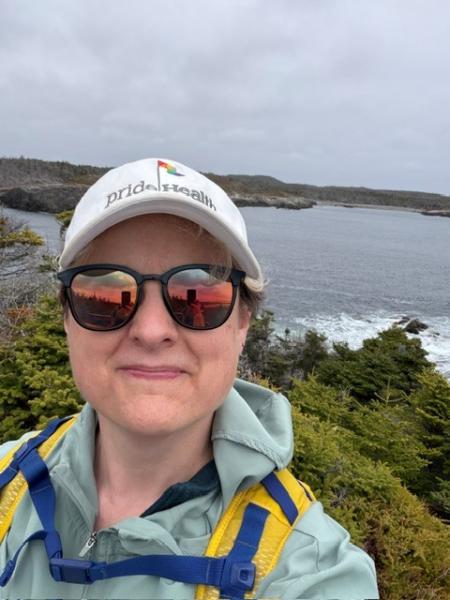
Family physician Dr. Catherine Bast has built their career around a belief that everyone deserves access to respectful, inclusive healthcare.
“It’s a basic human right,” said Bast.
For years, that principle shaped their work in Indiana, where they built one of the most inclusive primary care practices in the state. It’s also what ultimately led them to leave it behind. In 2024, after legislation banning gender-affirming care for youth took effect, Bast closed their clinic and made the decision to start over, eventually finding a new home in Cape Breton, where they are now continuing their mission.
Bast attended medical school at Indiana University and began providing gender-affirming care during residency. Even early on, it was clear the need existed and that it wasn’t being met.
By the time Bast completed their training, patients were travelling three to five hours to see them.
“There was nobody that was willing to really embrace these patients,” said Bast. “I wanted them to get healthcare in a place where they were not just tolerated but celebrated.”
In 2016, Bast and their partner opened Mosaic Health and Healing Arts in Goshen, Indiana, the state’s first family medicine practice explicitly welcoming 2SLGBTQIA+ patients.
What began as a small practice quickly grew into something much larger. By 2024, the clinic was serving about 4,000 patients, including roughly 1,600 transgender and nonbinary individuals.
“The clinic really took off and there was a clear need for it,” said Bast. But as the clinic expanded, so did political pressure.
In 2023, Indiana lawmakers passed legislation banning gender-affirming care for patients under 18. The law went further, prohibiting providers from referring patients to out-of-state care. “They wanted to silence us,” said Bast.
In response, Bast joined a lawsuit challenging the new law and represented other physicians. An initial ruling delayed the law, which gave them a brief sense of relief.
But that didn’t last. In February 2024, a higher court allowed the ban to take effect immediately, offering no detailed explanation.
“All of a sudden, I couldn’t take care of my patients,” said Bast. “I could no longer do evidence-based care, and this went against my ethics as a physician to do no harm.”
At the same time, Bast says providers faced lawsuits, mounting scrutiny and growing safety concerns. “What had been a safe place was now a target.”
By the summer of 2024, the risks to patients, to the clinic, and to Bast’s medical licence became too great. They made the decision to close Mosaic.
With that chapter ending, Bast and their partner began looking for a place where they could continue their work without restriction.
Nova Scotia quickly rose to the top of that list, with family in Antigonish and a long-standing connection to the province. “Nova Scotia has always felt like home to me,” said Bast.
After visiting several communities, they chose Cape Breton. “I really felt like there was a place for me here,” said Bast. “There were people needing care, and I felt like I could be useful.”
Bast now feels like they made the right decision.
“My life in Cape Breton is amazingly free and open, particularly in contrast to what I left,” they say. “I can get up every morning and feel good that my actions and my work match my commitment to doing no harm. And the community has made me feel very welcome.”
Bast is contributing to efforts to expand access to gender-affirming care, including a youth clinic in Sydney that is scheduled to open later this year.
Currently, young people on the island must travel to Halifax to access gender-affirming care. A local clinic would bring services closer to home and provide wraparound support, including mental healthcare, social work and medical treatment in one place.
“Access to gender affirming care is proven to improve health outcomes for those who need it,” said Bast.
Much of their work also involves addressing misconceptions.
“Gender-affirming care is evidence-based best practice. It’s well researched and major medical associations support the care,” said Bast. “Like any other health concern, the treatment is thoughtful and individualized. We are very deliberate.”
But access alone is not enough. Bast says that trust remains one of the biggest barriers for 2SLGBTQIA+ communities navigating the healthcare system. “If we don’t trust that we’re going to be seen and respected, we won’t access care.”
Without that trust, people may delay or avoid care altogether, leading to worse health outcomes. Creating inclusive spaces can help change that, from using correct names and pronouns to visible signs of support, like Pride flags.
“When people see signs that a place is inclusive, they start to trust that maybe they will be seen and heard,” said Bast.
Looking ahead, Bast sees momentum building through expanded clinics, growing education efforts and organizations like prideHealth that are advocating for change.
At the same time, their experience in Indiana remains a cautionary reminder of how quickly progress can shift. “We’ve got something here to protect. Let’s protect it.”
And one final message they share with the 2sLGBTQIA+ community: “I see you. We are here in this together. Please don’t lose hope.”
Photo of Dr. Catherine Bast.