4 min read
Posted
Thursday, July 30, 2026
at 10:38 AM ADT
Posted by
Categories
As virtual urgent care expanded in Nova Scotia, nurses supporting the service began working in a different way.
They were still assessing patients, initiating care plans, communicating with providers and supporting people through urgent health concerns. The difference was that the emergency doctor or nurse practitioner was not in the room, but connected virtually from another province.
Virtual urgent care is available at various Nova Scotia Health locations for people with urgent, non-life-threatening health issues. Patients are connected with an emergency doctor or nurse practitioner online - rather than in person - with support from on-site staff.
The shift was about helping patients in rural communities access care close to home, while supporting nurses to use their skills in a new way, said Susan MacDonald, charge nurse at All Saints Springhill Hospital’s Collaborative Emergency Centre.
“It’s all about service for me,” she explained. “This model of care really empowers you as a nurse and there’s a lot of support.”
MacDonald has been nursing for more than 43 years and was involved in the early work to support virtual urgent care at All Saints Hospital.
Together, she and Amy McMasters, rural clinical nurse educator for Northern Zone, helped turn local education and orientation work into a provincial Virtual Urgent Care Nova Scotia (VUNS) resource to support nurses as the service grew.
As more nurses began working in VUNS, McMasters said consistent education became increasingly important.
“As new staff came into the service, we needed to think about how we were going to prepare them for virtual care,” she explained. “It is different from other models of care and we wanted nurses to feel supported.”
That question led to a provincial VUNS clinical support page, developed with support from MacDonald, McMasters and a broader team.
The page brings assessment guidance, care directives, videos and practical tools together in one place. The resource gives nurses a consistent place to build knowledge, refresh skills and support safe, confident care as VUNS continues to evolve.
It also helps strengthen communication between on-site nurses and virtual providers, MacDonald noted.
“We wanted to support consistent assessments, strengthen communication with virtual providers and make sure patients could continue receiving care close to home,” she said.
VUNS helps highlight the depth of skill nurses bring to virtual patient care. During a visit, on-site nurses help bridge the distance between the patient in the room and the provider online.
“Nurses are the eyes and ears of the physicians,” said MacDonald. “That support helps patients get the right care at the right place.”
The impact is clear for McMasters.
“At the end of the day, this is about supporting clinical nurses and helping patients get the care they need,” she added. “Even when we’re not in the same room, we can still build trust, work as a team and keep the patient at the centre of everything we do.”
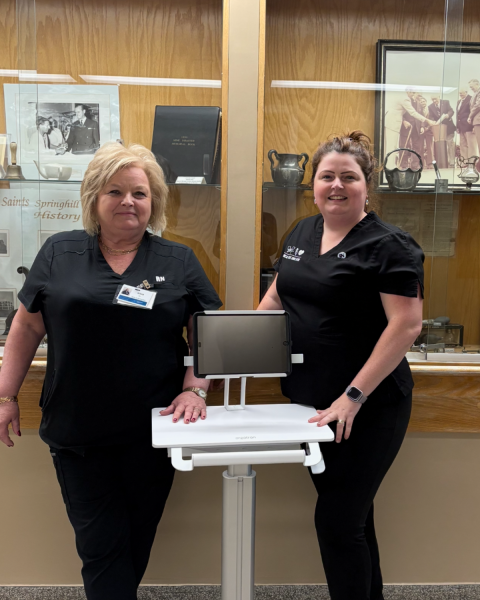
Photo of (L-R): Susan MacDonald and Amy McMasters.