5 min read
Posted
Wednesday, July 29, 2026
at 12:00 PM ADT
Posted by
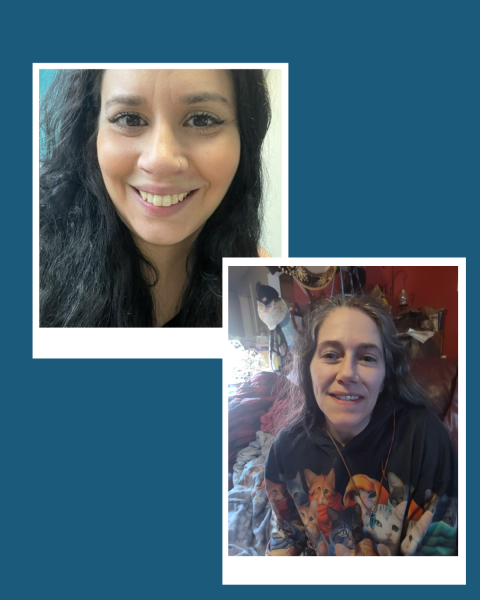
For years, Chelsea Cook had been searching for a way to make sense of her struggles with mental health and substance use concerns.
She had been making great progress attending group treatment at the Recovery Support Centre (RSC) at Soldiers Memorial Hospital in Middleton, when one day last August a flyer advertising a volunteer opportunity caught her attention.
And suddenly, a path to finding meaning in her struggles materialized.
The Mental Health and Addictions Program (MHAP), which had recently launched a pilot project to enhance care and support for people living with concurrent disorders, had been looking for patient family advisors to provide valuable insight into how the system can make improvements.
Cook did not hesitate and immediately signed up to be part of the project. After going through a vetting process with Nova Scotia Health’s Volunteer Services, she was brought on board.
“It was an opportunity for me to bring my lived experience to something meaningful," Cook explained. “It’s something that I think a lot of people, especially those who struggle with addiction, they struggle a lot with what the meaning of going through this was, or if there is a bigger purpose."
The term “concurrent disorder” is defined as a condition in which someone is living with co-existing mental illness and substance use concerns.
Amanda Pollard, who also has experience with concurrent disorders, also happened across information on the pilot at the community and mental health clinic in Dartmouth.
Like Cook, Pollard saw being part of the project as an important step in her own recovery.
“I felt that I might have something to contribute to being a part of the mental health and addictions program,” Pollard said.
“If I could pass on my knowledge and help other people, that would make me happy.”
The pilot’s primary focus is developing and implementing enhanced team education, support and processes within select RSCs and adult Community Mental Health and Addictions (CMHA) clinics.
Once the project was off the ground, pilot sites in Truro and Port Hawkesbury began weekly case review sessions facilitated by a psychiatrist with expertise in concurrent disorders care. During these sessions, clinicians from the RSC and CMHA teams brought forward complex cases for interdisciplinary discussion, consultation and shared learning. The MHAP recruited several patient family advisors, including Pollard and Cook, whose living and lived experience helped shape the pilot.
“I wasn’t really sure what I was getting myself into and it actually turned out to be really amazing working with the team and bringing that lived experience and being able to share,” Cook said.
“I was actually able to turn such a negative experience at such a terrible time in my life into something that is more positive, and I think to have all of that we go through and to have a purpose to help somebody in the future. I think that is very powerful.”
Being part of the project also helped Pollard in her own recovery.
“It’s been absolutely wonderful. It’s been so fulfilling for me. I actually feel like I’ve contributed to something so worthwhile,” Pollard explained. “And I feel like my network, the team of individuals that support me has grown, it’s gotten a lot larger.”
Work on the project is ongoing, with the development of a comprehensive evaluation framework and data collection tools to assess educational activities, care processes and pilot outcomes.
Both Cook and Pollard say they have learned a lot about themselves and the system and encourage anyone with lived experience to sign up to become patient family advisors at Nova Scotia Health.
“Using people who have this lived experience to shape and help make changes, I think is extremely beneficial for the system,” Cook explained.
“About the system itself, I’ve learned that it can be flexible. When you’re willing to become a part of the system and volunteer, your voice can be heard and you can make a real change,” Pollard said, adding that anyone on the fence about becoming a patient family advisor should give it a chance.
“I would encourage them to call and just investigate what the volunteer path looks like just to see if that coincides with what their values are. For people who like to make a difference, volunteering is the way to go.”
Photo of (L-R) Chelsea Cook and Amanda Pollard.