3 min read
Posted
Tuesday, September 29, 2026
at 9:52 AM ADT
Posted by
Categories
Sepsis is a serious and potentially life-threatening condition that develops when the body has an extreme response to infection. When sepsis occurs, recognizing it early and starting the right care quickly can make an important difference.
Across Nova Scotia, emergency department teams have been working to recognize sepsis earlier and begin treatment sooner through the Emergency Department Sepsis Improvement Package. This work includes screening patients for possible signs of sepsis when they arrive, using a consistent approach to care in regional and rural emergency departments, and providing clearer information for patients and families.
The focus is on making care safer and more consistent for patients, regardless of where they receive care, according to Barbie Cook, director, Integrated Rural Health, and Sepsis Co-Lead for Northern Zone.
“Sepsis patients can become critically ill very quickly, so recognizing the signs early is vitally important,” says Barbie. “The sooner we identify that someone may have sepsis, the sooner our teams can assess them and begin appropriate treatment, including timely antibiotics, which we know can improve patient outcomes.”
Having a consistent approach to sepsis care helps teams quickly screen patients, recognize possible sepsis and begin treatment when every minute matters. By reviewing patient cases and results over time, teams can see what is working well, identify opportunities for improvement and continue strengthening sepsis care across the province
“We want patients and families to experience coordinated and consistent care across Northern Zone,” says Barbie. “Through our Northern Zone Sepsis Working Group, teams are working together on shared priorities and improvements so that all team members have the knowledge and capability to recognize and respond to sepsis early across urgent care settings and emergency departments throughout the zone.”
For Barbie, success means knowing that teams are prepared to recognize sepsis and respond quickly and appropriately.
Recognizing the signs of sepsis and acting quickly can save lives.
During Sepsis Awareness Month, and every day, Northern Zone and teams across the province are helping turn awareness into action with earlier recognition, timely treatment and safer, more consistent care for patients.
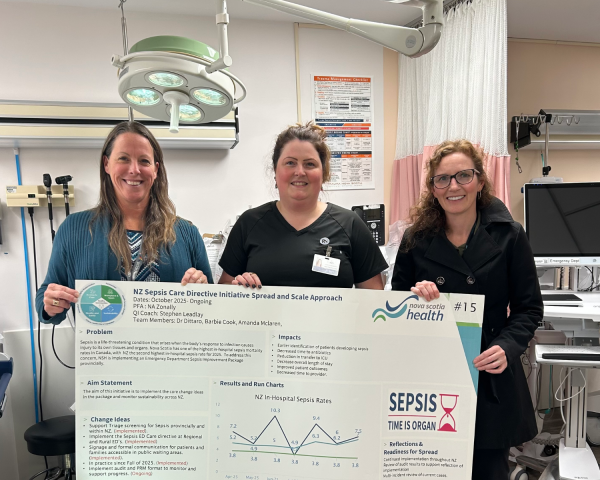
Photo of (L-R) Barbie Cook, Director, Integrated Rural Health and Sepsis Co Lead for Northern Zone; Amy McMasters, Northern Zone Rural Clinical Nurse Educator; and Heather Cochrane, Northern Zone Director of Quality, with a poster highlighting the Northern Zone Sepsis Care Directive initiative.