5 min read
Posted
Wednesday, April 22, 2026
at 12:00 PM ADT
Posted by
Categories
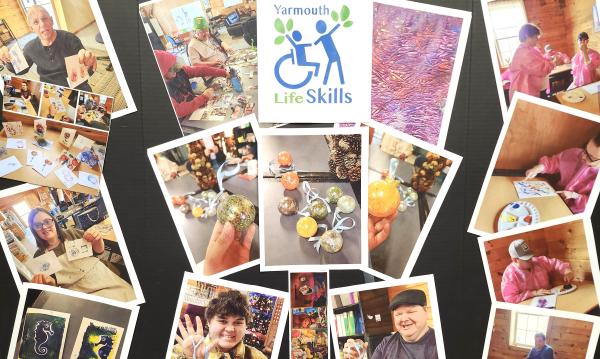
An art program designed to support mental wellness of adults with intellectual disabilities in Yarmouth has grown into a selfsustaining fixture of Yarmouth Life Skills (YLS), thanks in part to a $3,000 wellness fund grant from the Yarmouth County Community Health Board and a partnership with the Yarmouth Arts Society.
“Supporting Mental Wellness Through Art” was launched early last year to give participants an outlet to express emotions, build confidence and exercise personal choice through creative activities. The program offers a space where adults with intellectual disabilities can explore feelings through painting, mixed media and other handson projects.
Community Health Boards allocate funds on behalf of Nova Scotia Health through the Wellness Fund grant program. Community health board wellness funds support non-profit groups working to improve health in their communities. Among other things, grants go toward programs that promote food security, housing, transportation and social participation. The goal is to reduce risks of poor health outcomes in Nova Scotia communities.
Yarmouth Life Skills executive director Brian Durkee said he’s seeing a shift in how disability support funding is allocated in the province. He said it’s now more individualized, with money going directly to families to choose where and how their loved ones receive services.
Durkee said that shift has increased the importance of this art program.
“Our individuals are not used to choice,” Durkee said. “There’s been this whole theme of choice for several years now. The point of this was to build social fabric, to introduce choice and hopefully have some outcomes like creativity and selfesteem.”
Durkee said the program arrived at a critical moment. With limited service options in Yarmouth, organizations like YLS must adapt to remain relevant to families who will soon be selecting programs based on personal fit rather than institutional assignment. Creative programming, he said, is consistently among the most popular offerings.
“These are the programs they gravitate towards; the music programs, the art programs,” he explained. “The art program is something that is at full capacity all the time.”
The wellness fund grant allowed YLS to purchase specialized adjustable art desks, stools and other materials. Durkee said those items transformed the space and it continues to be used daily.
The partnership with the Yarmouth Arts Society also brought in an instructor specializing in foil art, along with volunteers who have continued to support the program. Participants now work mostly with paint and natural materials such as rocks collected from local beaches.
Their artwork is displayed throughout the YLS building, taken home or, more recently, turned into merchandise through an online print‑on‑demand service that credits each artist.
Durkee said the program has become a weekly highlight for many of the 18to-70yearold adults who attend YLS. With eight dedicated art tables and room for a couple of participants at round tables, sessions typically reach their maximum of about 10 people.
Beyond creativity, Durkee said the program supports emotional development. Many participants have limited opportunities to express feelings or make meaningful choices in their daily lives. Art, he said, activates parts of the brain linked to memory, emotion and wellbeing.
Durkee, who previously worked in a geriatric clinic, compared the effect to playing familiar music for people with Alzheimer’s disease — a stimulus that can unlock memories and emotional responses.
Looking ahead, he said programs like this will be essential for organizations navigating the new funding landscape.
The initial $3,000 boost created a program that now costs the organization only about $100 a year to maintain. The ongoing volunteer support, durable equipment and steady participant interest have made it one of the most successful initiatives the organization has launched, Durkee said.
Photo of A collage of images from Yarmouth Life Skills.