5 min read
Posted
Tuesday, November 10, 2026
at 8:00 AM AST
Posted by
Categories
For some Nova Scotians, accessing care isn’t as simple as booking an appointment. It can mean waiting until payday to afford a taxi or struggling to leave your home because of personal mobility challenges.
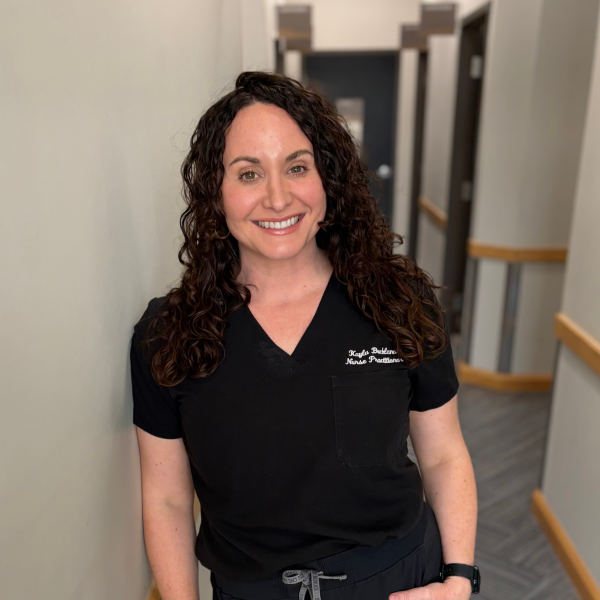
At the Sydney Primary Care Clinic, nurse practitioner Kayla Buckland sees these barriers first-hand, and she knows helping people access care sometimes means looking beyond the health concern that brought them to the clinic.
“Improving access to care is meeting patients where they’re at,” says Kayla.
That might mean offering a home visit to someone who has difficulty getting out of their home, arranging a virtual follow-up to save a patient another trip, or collaborating with the clinic’s social worker to navigate barriers so patients can make a critical medical appointment.
The patient visit starts with understanding each person’s circumstances and finding practical ways to help, above and beyond the medical diagnosis.
“Many of my patients in Sydney face challenges in accessing primary care,” says Kayla. “Being able to provide that continuity, build trust, and help them navigate their health concerns is really incredibly rewarding.”
Kayla lives in Sydney with her husband and two daughters. She knew she wanted to work in the community she calls home. She began her career in primary healthcare as a family practice nurse, where she discovered she wanted to play a broader role in her patients’ care.
“You would carry the football, but it was always the physician [or nurse practitioner] that could make the touchdown by making the diagnosis and care plan. That was the missing piece,” Kayla says.
After completing her nurse practitioner education at Dalhousie University in 2023, Kayla was able to take on responsibilities that include a holistic approach to healthcare, including diagnosing health conditions and prescribing treatment.
Today, being part of a collaborative primary care team also helps her connect patients with the provider best suited to their needs.
“I’m so fortunate to work with a multidisciplinary team. Patients benefit from having the right provider for their needs. Instead of seeing me for a routine immunization, for example, they can see our family practice nurse, who works to full scope to provide that care. That also frees up my appointments for patients who need assessment, diagnosis or treatment," says Kayla.
Improving access to care ultimately comes back to the relationships Kayla builds with patients and the difference those interactions can make.
“It's incredibly rewarding to help someone understand a new diagnosis, seeing improvements in their health in just one or two appointments, or simply providing reassurance during a difficult time. I'm fortunate to experience these small meaningful moments," says Kayla.
The Sydney Primary Care Clinic provides care to people on the Need a Family Practice Registry and do not have a regular family doctor or nurse practitioner. Care is collaborative with a team that includes family practice nurses, pharmacists, social workers and physicians.
Kayla says caring for patients is a team effort. She points to the strong partnerships the clinic has with local pharmacies, where pharmacists play an important role in helping patients manage chronic conditions and can connect them back to the clinic when additional care is needed. "It's about making sure patients get to the right provider when they need them," she says. "When we work together, patients can access care sooner and get the support that's best suited to their needs."
For some patients, the clinic is a place to get help with immediate health concerns. But for others, particularly those managing multiple chronic conditions, it can become a more consistent connection to primary healthcare.
A patient living with cancer and diabetes, for example, may also be managing COPD or a wound that requires frequent care. They may return every month or two to help keep their health on track. Without a regular family doctor or nurse practitioner, some patients rely on the clinic for care while they wait for a permanent provider.
Photo of Kayla Buckland.