4 min read
Posted
Friday, July 17, 2026
at 12:00 PM ADT
Posted by
Categories
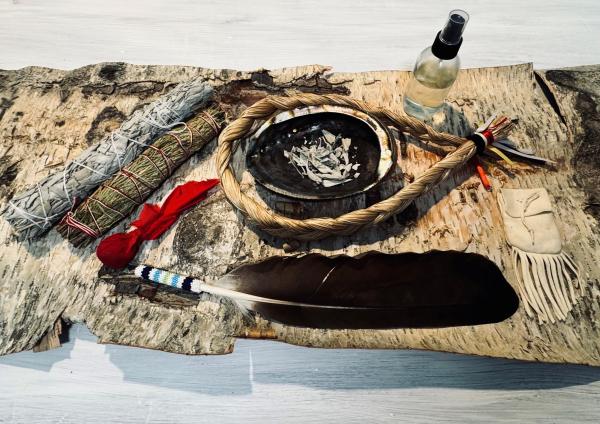
A recent National Indigenous History Month virtual panel discussion revealed a new smudge and ceremony policy will soon be in place at Nova Scotia Health facilities.
Nova Scotia Health, in collaboration with Department of Health and Wellness (DHW), hosted a discussion on June 19 titled Walking Together: A Conversation on Mi’kmaw and Indigenous Wellness, Relationships and Reconciliation in Healthcare.
The two panelists were Nova Scotia Health Indigenous consultant Shawnee Sylliboy and Naomi Pierrard, Mi’kmaq and Indigenous senior strategist at DHW.
Mahogany O’Keiffe, senior director of Nova Scotia Health’s Equity, Diversity, Inclusion, Reconciliation and Accessibility portfolio, opened the discussion. “We’re at a moment where listening isn’t enough,” she said. “People need to walk away ready to act.”
With more than 100 people attending virtually, there were three main themes of the discussion: relationship building, cultural safety and shared responsibility. There was a focus on creating a province-wide smudge and ceremony policy at Nova Scotia Health.
Pierrard shared why the policy matters.
“Smudging isn’t symbolic,” Pierrard said. “It’s part of how many Indigenous people prepare themselves for difficult conversations, grief, healing and decision‑making. If we say we want culturally safe care, we need to make space for practices that support people’s wellness.”
The policy is foundational, Sylliboy added, because many staff have never witnessed a ceremony in a healthcare setting.
“People want to be supportive but they don’t know what that looks like,” she explained. “Policy gives clarity. Education gives confidence.”
Panel attendees heard smudging is a healthsupporting cultural practice, not an alternative medical treatment. It can be used alongside clinical care to support emotional, mental and spiritual wellbeing - all of which are recognized determinants of health.
Sylliboy emphasized that smudging is not only for patients.
“Healthcare workers carry trauma too,” she said. “Smudging can help staff regulate, reflect and reconnect. When staff feel grounded, care improves.”
A smudging policy will provide clear procedures for safe indoor smudging; reduce confusion about fire alarms, ventilation, and safety protocols; ensure staff know how to support patients who request a ceremony and normalize Indigenous presence and practices in healthcare spaces.
Vitally important, the panelists agreed, is that it signals reconciliation is operational and not symbolic.
Indigenous knowledge is not “spirituality beside medicine,” Pierrard said, pointing out it is knowledge about health but shaped by land, community and lived experience. She framed the discussion through Two‑Eyed Seeing, a Mi’kmaw principle that brings Indigenous and western knowledge systems together.
This improves trust and adherence to care plans, she said.
Pierrard reminded participants Indigenous knowledge must be approached with respect and offered three guiding questions for leadership: Is this work authentic? Is it accurate? Is it sacred?
“To be authentic is to be genuine and real. To be accurate is to conform exactly to the truth. Sacredness demands reverence.”
Pierrard acknowledged that reconciliation is often misunderstood but she encouraged leaders to focus on building balanced, accountable relationships.
“We can focus on the negative. That’s easy,” she added, “but it doesn’t do any good.
“We’ve done things a certain way for so long. Allow yourself to be vulnerable and comfortable doing things differently.”
Photo by Shawnee Sylliboy.