5 min read
Posted
Friday, March 6, 2026
at 8:21 AM AST
Posted by
Categories
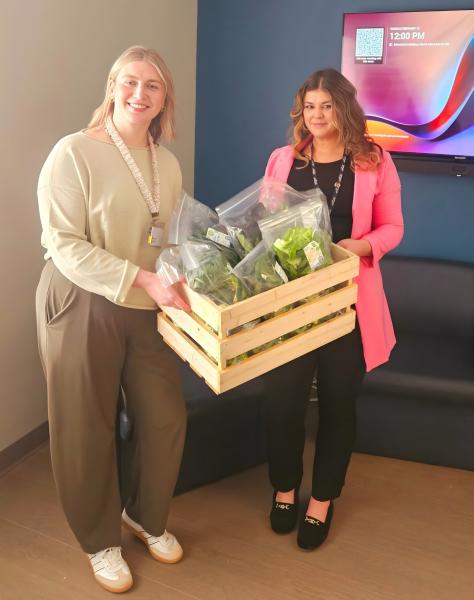
Highland Health Home and Learning Centre in New Glasgow is piloting a partnership focused on improving access to fresh, nutrient-dense food for patients and their families.
The 12-week initiative connects Nova Scotia Health staff with Summer Street, a local charity and social enterprise that operates a hydroponic greenhouse, where greens like spinach, kale, lettuce and more are grown year-round in a controlled environment using nutrient-rich water instead of soil.
Each week, 20 parcels of greens are delivered to a local food bank, picked up by clinic staff and brought back to the site, where they are stored and offered for free to families with dependent children under the age of 25.
The idea was initiated by Brittany Currie, a registered social worker at the clinic. In her previous role in Nova Scotia Health’s Mental Health and Addictions program, she frequently saw the effect food insecurity had on children and youth.
“In Nova Scotia, households with dependent children experience some of the highest rates of food insecurity,” said Currie. “When we looked at our own patient population, about 20 per cent are families with children. We wanted to explore whether we could reduce barriers to accessing fresh, healthy food.”
According to data from the Nova Scotia Department of Finance and Treasury Board, food insecurity in the province is highest among those under 18 and those aged 18–24. At the same time, Canada’s Food Price Report 2025 from Dalhousie University’s Agri-Food Analytics Lab projects one of the highest increases in food prices ever recorded. For the clinic team, improving access to healthy food is one practical response.
Unlike local food banks, which often require income eligibility, this program offers greens to families within the clinic population during regular visits, with the option to return during the week while supplies last.
While this approach helps address food insecurity by increasing access to fresh produce, the team says it also goes beyond income-based need. By making greens available within primary care, the goal is to reduce everyday barriers that can affect healthy eating, including time pressures and busy family schedules.
“There’s an important distinction between food security and nutrition security,” said Charlotte Green, health services lead. “Access to fresh, nutrient-dense food supports health promotion and chronic disease prevention. That’s what we’re trying to support.”
Each parcel includes a bag of greens (kale, spinach, spring mix, bok choy or lettuce) along with four simple recipes developed by the clinic dietitian, Jessica Cyr: a smoothie, a frittata, a pasta dish and a mixed greens salad. The focus is on practical options that fit into busy family routines.
“We know that time is a barrier for families,” said Green. “Between work, school, and evenings spent running to the rink or the ball field, it’s not always easy to plan meals around fresh ingredients. Providing the greens along with quick recipes helps make it easier for families to use them.”
Regular consumption of vegetables supports overall health, including adequate intake of vitamins, minerals and dietary fibre. Creating exposure to healthy food environments can help people adopt and maintain healthy dietary practices over time.
In the first three weeks, the program reached 101 people through approximately 30 families.
“We’re building awareness first,” said Haley Kirby, primary health care co-ordinator. “We’re tracking how many parcels go out each week and whether families are open to providing feedback at the end. The uptake so far has been really encouraging.”
For the clinic team, the project is also an opportunity to explore integrated, community-based approaches to primary care. Data collection is built into the design, including measuring interest through follow-up surveys or focus groups.
“After the 12 weeks, we’d like to know what families thought of it,” said Green. “Did it help with access? Did they use it? Did they try the recipes?”
The program is currently limited to patients of Highland Health Home and Learning Centre. While the long-term direction has not yet been determined, the team is hopeful what they learn will help guide next steps.
“I just enjoy seeing the greens go out the door,” said Currie. “If we can reduce barriers and increase exposure to fresh greens, that could help build healthy practices early in life.”
The team hopes findings from the pilot will inform future conversations about how primary care and community organizations can work together to improve access to healthy food in Pictou County.
Looking for greens? Those looking to purchase hydroponic greens grown by Summer Street can do so at the Summer Street lobby farm fridge, located at 72 Park St. in New Glasgow, Monday to Friday from 9 a.m. to 4 p.m. Additional information about locations and availability can be found on Summer Street’s website: https://summerstreet.ca/