7 min read
Posted
Sunday, September 20, 2026
at 8:00 AM ADT
Posted by
Categories
In Nova Scotia Health’s Western Zone, Public Health is playing a pivotal role in evidence and data gathering to inform planning and to support partners, all grounded in equity, giving a voice to those who often feel invisible.
Through leadership, partnership-building, and evidence-based practice, members of the Public Health Western and Central Zone Healthy Communities teams have helped bring forward concrete data that paints a clearer picture of homelessness in Western Nova Scotia—data that communities have long said they needed.
For Public Health team members Nancy Green and Olivia Pattison, listening to community voices is central to their work. Service providers and community organizations who support work on housing insecurity and homelessness were telling them the same thing: they were witnessing increased homelessness firsthand. However, without local, credible numbers, their concerns were often dismissed. While urban areas had data to support advocacy and planning around homelessness, rural communities did not.
In 2024, in partnership with Dr. Mary Sweatman, a professor in the Department of Community Development at Acadia University, a regional service-based count on homelessness was conducted. This count emulated two previous counts in the Annapolis Valley (2020 and 2022), and multiple counts in Eastern Nova Scotia, where the methodology was developed.
Unlike traditional counts, service-based counts collect data over a month-long period and rely on service providers completing surveys based on known information for individuals they supported during that time. Individuals themselves are not interviewed, making the role of trusted service providers and community-based organizations essential.
“The service providers and community-based organizations really wanted an outside organization to help prove what they were seeing anecdotally—that homelessness is a rising concern in rural Nova Scotia,” said Dr. Sweatman.
Public Health as a connector and support
By leveraging existing relationships and fostering new ones, Public Health’s Western Zone Healthy Communities team helped recruit and support service providers and community-based organizations across the region to participate in the count. Pattison, a health promoter in Western Zone, also provided hands-on support, offering training on the survey tool and guidance on approaching sensitive conversations with care and respect.
“With Public Health’s involvement, we were able to create a network of services and community organizations working throughout the study site,” said Dr. Sweatman. “Those relationships were integral for recruiting organizations and mobilizing knowledge through presentations, infographics, and discussions with municipal councils and media.”
Public Health’s health promoters worked alongside Dr. Sweatman, her team, and housing coalitions and groups to support coordination of the count in community. This included connection and relationship building with many community- and government-based organizations, including within Nova Scotia Health (such as the Mental Health & Addiction Community Wellness and Supports team). Community-based organizations included shelters, food banks, libraries, recreation, care providers, and many others came together and demonstrated the power of a whole-community approach.
Data that changes the conversation
The 2024 count across western Nova Scotia found 672 individuals experiencing homelessness: 506 adults and 166 children under the age of 16. This count collected data from forty-seven organizations in the counties of Lunenburg, Queens, Shelburne, Yarmouth, Digby, Annapolis, and Kings and the West Hants part of Hants County. Although a rural service-based count is currently the best practice for gathering homelessness data, the numbers are likely an underestimation as not all people experiencing homelessness access these services. However, the data has already transformed community conversations and support across the region.
“When these numbers are shared, it needs to be with intention and care. This supports constructive conversation and supportive action while avoiding reinforcing stigma,” explained Green, public policy and social action consultant. “Public Health helps provide context for greater understanding and communication about the data from the health and wellbeing perspectives.”
Community organizations are already using the findings to support funding proposals, municipal presentations, and service planning.
In West Hants, Peer Outreach Support Services and Education (POSSE) has used the data to advocate for a warming centre, urgent funding, a housing support worker, and improved access to mental health supports.
“The results validated what people were telling us,” said Kimm Kent of POSSE. “Now we have evidence.”
In Shelburne County, the data is helping strengthen collaboration and improve safety for vulnerable populations.
“Accurate, community-based data is critical,” said the Senior Safety and Services Coordinator for Shelburne County Senior Safety and Services Society. “It supports advocacy, informs planning, and strengthens our partnership with Public Health.”
“For years, there has been a lack of understanding about the experience of homelessness in our communities,” said Pattison. “This data provides deeper context and helps partners tell the real story of what’s happening in rural areas.”
Looking ahead
The project continues to grow, with Public Health emphasizing ongoing relationship-building—especially within Nova Scotia Health and with diverse communities across the region—to work toward future counts better reflecting the full diversity of our rural communities.
“We’ve heard loud and clear that this work is impactful and worth continuing,” said Dr. Sweatman. “With Public Health’s leadership, coordination, advocacy, and strong partnerships, we’re now aiming toward coordinating of the timing of community support and service-based counts across the province.”
For the health promoters supporting this work, the motivation remains rooted in community. “It inspires me to see the dedication people have to this work,” said Green. “Public Health’s role is to support that effort—so communities have the evidence they need to create change.”
For more information on how you can be involved in the next count, please contact mary.sweatman@acadiau.ca. You can read the full 2024 report here: https://sshac.ca/wp-content/uploads/2025/06/everyone-counts-2024-western-region-final-report-updated-1.pdf
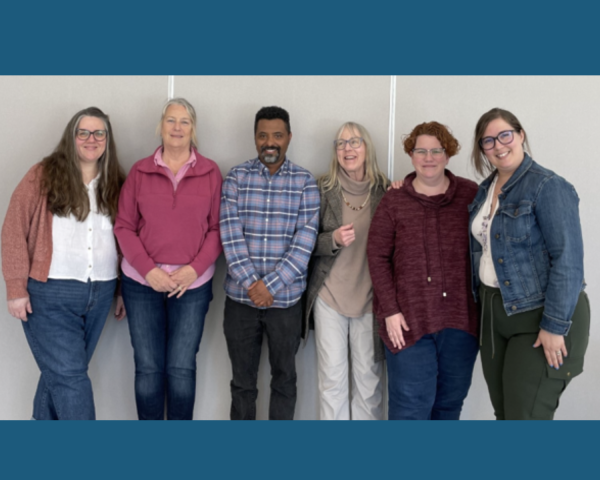
Public Health members supporting this work (2024 & 2027):