6 min read
Posted
Tuesday, July 22, 2025
at 11:57 AM ADT
Categories
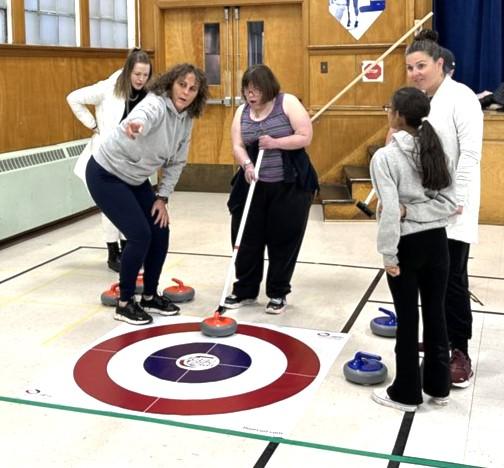
Brooms swept (kind of), stones slid (rolled, actually) and smiles lit up Halifax area gymnasiums recently as young athletes got their first taste of floor curling.
In a November pilot program by Special Olympics Nova Scotia, athletes aged 7-20 with intellectual and developmental disabilities learned the ropes of this inclusive, action-packed sport— wrapping it all up with a spirited tournament that proved curling isn’t just for ice; It’s for everyone.
The Cobequid Community Health Board provided $1,500 toward two floor curling sets designed to replicate what athletes would experience on the ice. The sets include adaptable push sticks with handles, a modified button and rocks on wheels. Special Olympics Nova Scotia tasked an instructor to teach participants how to use the equipment and proper techniques, said Rachel Skanes, the organization’s health and youth program director.
Community health board wellness funds support non-profit groups working to improve health in their communities. Among other things, grants go toward programs that promote food security, housing, transportation and social participation. The goal is to reduce risks of poor health outcomes in Nova Scotia communities.
The floor curling project launched a pilot event for Youth MultiSport athletes in Sackville and Bedford, offering a new pathway to skill development and competition. Through hands-on experience, athletes explored the fundamentals of the sport and began engaging in play at a more competitive level. By introducing them to the culture and strategy behind floor curling, the program enriched their participation and helped foster a deeper connection to this inclusive, accessible activity.
Special Olympics Nova Scotia received free guidebooks, instructional materials, and additional support from other partners, Skanes said. “It was a real team effort and we’re grateful.”
The youth multi-sport program “bridges a big gap we noticed between our younger fundamental programs and our more competitive sports programs, like bowling or bocce, which most people associate with Special Olympics,” Skanes added. When including the participating Halifax area locations, more than three dozen athletes have given floor curling a try.
The multi-sport program helps athletes build the skills needed to eventually join competitive programs. One thing Special Olympics really wanted to do was teach the fundamentals of curling, something challenging to accomplish without easy access to ice and difficulties surrounding transportation to curling rinks for athletes and their families.
“That’s where the four-floor curling sets came in—they’ve been a total game changer,” noted Skanes. “They allow us to teach curling in a way that’s accessible, fun, and skill-building, all without needing a rink. It’s exciting because our athletes are so eager to learn and now we can actually provide them with that opportunity.”
Special Olympics Nova Scotia looks to expand floor curling to places outside of Halifax, already eyeing Annapolis County.
Where did this idea originate?
“Curling is such a big part of our provincial and national (Special Olympics) competitions, so it was important to give our athletes—especially those with intellectual and developmental disabilities—an opportunity to start developing those skills early,” Skanes explained. “Floor curling sets are incredibly expensive, as you can imagine. That’s when I started looking for a community partner to help fund the project. The support we’ve received has been amazing, and the impact on our athletes has been so positive.”
Skanes said it’s difficult to measure how important it is to have such a positive program operating in the region.
“Introducing our athletes to a new sport like floor curling has been incredibly meaningful. Having an intellectual or developmental disability can make it challenging to participate in sports and other community or recreational activities,” she pointed out.
“So, offering a sport that’s both financially and physically accessible has opened up new possibilities. It’s given our athletes more freedom, more autonomy and confidence to pursue our competitive curling programs if they choose to—with stronger skills and greater self-belief.”
The floor curling program matters, Skanes added, as anyone taking part in the Special Olympics program immediately sees the impacts.
“It’s an incredible chance for them to grow their teamwork abilities,” she said. “They also gain a strong sense of autonomy and independence, empowering them to try new sports and confidently share their experiences with teammates."
The financial support of the Cobequid Community Health board also paved – or curled – the positive way forward. Special Olympics Nova Scotia also partnered with the Rocks and Rings program and Rock Solid Productions for the project, which gave discounts on the equipment and connected them with a local instructor.
"It really shows how supportive the community is for youth with intellectual and developmental disabilities,” Skanes said. “Being able to connect with the community and learn about what other organizations are doing to improve health and well-being was incredibly inspiring and impactful.”
Photo of participants engaging in floor curling activities in Halifax.