4 min read
Posted
Thursday, February 5, 2026
at 12:14 PM AST
Posted by
Categories
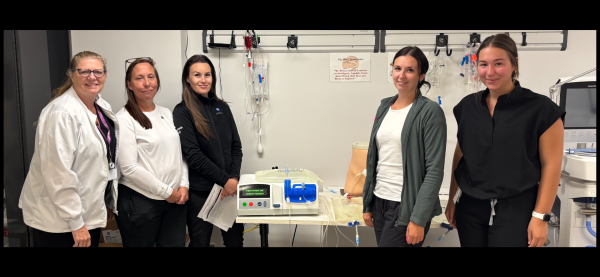
An education initiative at Aberdeen Hospital in New Glasgow is helping peritoneal dialysis inpatients receive care much closer to home than previously available.
“We had patients who managed peritoneal dialysis at home but could not continue that care when they were admitted to hospital,” explained Robin Fraser, clinical resource nurse. “We knew we had to find a way to support them close to home.”
Before this new work at Aberdeen Hospital began, patients often faced transfer to Halifax or a temporary switch to the more invasive hemodialysis, even when peritoneal dialysis remained the best option.
“None of these options truly supported what was best for our patients,” said Sharon Mollins, Northern Zone clinical nurse educator for dialysis. “People prefer to stay close to home and continue the care they know and that works best for them.”
Teams responded quickly. Education rolled out on the 4 Medicine unit to support continuous ambulatory peritoneal dialysis, followed by continuous cyclic peritoneal dialysis, a more advanced option. Today, 4 Medicine is the only unit in Northern Zone with staff trained to provide both forms of peritoneal dialysis.
Staff interest was strong from the start.
“Teams were eager to learn,” said Mollins. “They wanted to understand the full picture of care, not just how to perform the treatment, but how to support patients throughout their hospital stay in a holistic way.”
Education included hands-on practice using simulation mannequins and task trainers. Clinical nurse educators, professional practice leads, clinical practice leads, and clinical resource nurses from the Northern, Central and Eastern zones worked together to support learning and share expertise. Health service managers and site leads supported the work and helped make it possible.
Patients and families also played an important role.
“Families showed us how each patient manages dialysis at home,” said Fraser. “That helped staff provide care that felt familiar and respectful. What patients normally do for themselves at home, staff can now support in hospital.”
For patients, the impact is shown in their comfort and recovery. They can take part in physiotherapy and focus on healing while receiving treatment. For many, staying in their home community eased stress during an already difficult time.
For some families, out-of-area care meant months of long drives, winter travel, and time apart, which added strain during an already challenging period.
“Having her cared for here made a huge difference,” said Sharon Rapp, whose daughter received this service. “I spent months travelling back and forth and worrying when I couldn’t be with her. Once she came to Aberdeen, I could visit every day. Being closer to home meant more family and friends could come see her, and it really lifted her spirits. Her days were better.”
For staff, the initiative has created opportunities for professional growth and strengthened confidence in delivering specialized care. Building on this success, education has now expanded to other sites across Northern Zone.
“When teams respond to patient need and work together, care improves,” said Mollins. “This shows what is possible.”
Photo of (L-R): Sharon Mollins, clinical nurse educator, Northern Zone; Robin Fraser, clinical resource nurse, Northern Zone; Michaela Rudderham, clinical nurse educator, Eastern Zone; and Jessica Young and Callie Fraser, licensed practical nurses, take part in continuous cyclic peritoneal dialysis training in the simulation lab at Aberdeen Hospital in New Glasgow.