4 min read
Posted
Friday, February 13, 2026
at 11:55 AM AST
Posted by
Categories
Every day, patients across Nova Scotia experience liver and pancreas disorders and are added to the list/triaged for a specialized procedure available at the QEII Health Sciences Centre Halifax Infirmary site.
Endoscopic retrograde cholangiopancreatography procedures, or ERCPs for short, are advanced, minimally invasive procedures that combine endoscopy and fluoroscopy to diagnose and treat issues in the bile, hepatic and pancreatic ducts. By addressing blockages and other problems in a single procedure, ERCP can offer an efficient, non-surgical option for many patients.
ERCPs are often scheduled on short notice, so timely co-ordination is critical to help move patients and connect them with the care they need.
At the Halifax Infirmary, the minor procedures team now uses Care Coordination Centre (C3) technology to oversee ERCPs. The use of this technology has been making the overall flow of procedures smoother and faster.
Using the C3 Patient Manager (PM) tile gives the team a real-time view of which patients are coming in, where they’re coming from, and how they’re being transported. This means fewer surprises, less confusion, and more time focused on patient care.
“Using C3 has empowered our team to communicate more clearly about patient needs,” said Katherine Gould, a registered nurse and charge nurse at the ERCP clinic. “It has streamlined communication by reducing repeated phone calls and emails, saving staff time and helping patients avoid delays getting to and from their ERCP appointments. We can now anticipate issues earlier and adjust to keep procedures flowing.”
Improved communication between the clinic and hospital units now happens in real time. Two-way updates are faster than ever, giving team members quick answers and immediate visibility when changes occur. This approach reduces delays and keeps everyone aligned.
The provincial C3 escalations team actively supports the ERCP clinic in resolving challenges. With staff now able to monitor real time data and spot potential delays, issues can be reported directly to the C3 team. This process has led to quicker problem-solving and improved clinical operations.
With this new technology patients get their ERCP done and return to their home hospital sooner, where they can be closer to their support system. “As an ambulatory clinic, we aren’t equipped for extended stays,” Gould explained. “With C3, patients spend less time waiting and more time where they can receive the right care, at the right place, at the right time.”
A new feature in the patient manager tile lets the team monitor patient transfers in real time, showing when a transfer is booked and tracking its progress as it happens. This means the clinic receives updates on when a patient is booked, reduces the number of unneeded phone calls to Emergency Health Services (EHS) and gives them the patient's expected arrival time, alongside the direct communication with the sending unit. This transparent view of both the transfer process and timing helps them better understand the patient's entire journey as a whole.
Adopting new technology can feel challenging, but Gould said the provincial C3 team made the transition smooth. “We worried it might take time away from patients, but it’s done the opposite. The support we received helped us make the C3 tiles work for our clinic’s needs and spend more time delivering hands-on care.”
For patients, this means care when they need it without unnecessary delays. For staff, it means less stress, fewer overtime hours, and more time providing care. “It’s improved our workflow and our workplace satisfaction,” Gould added. “We feel more connected and focused on what matters most: our patients.”
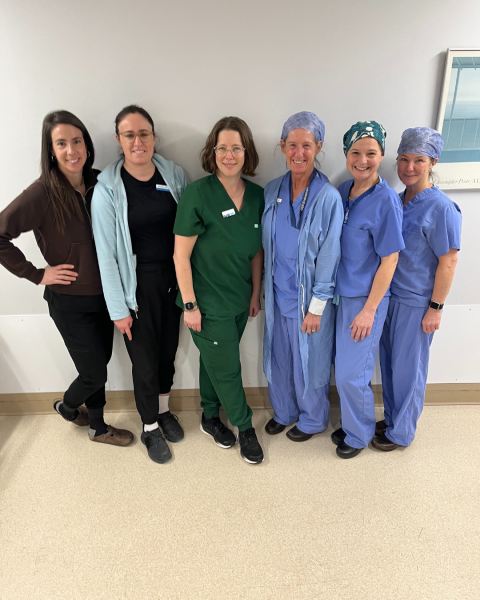
Photo of (L-R) Andrea Jenkins, Kendra MacDonald, Katherine Gould, Ellen Haliday, Angie Davidson, Terra Breen