5 min read
Posted
Friday, May 1, 2026
at 12:47 PM ADT
Posted by
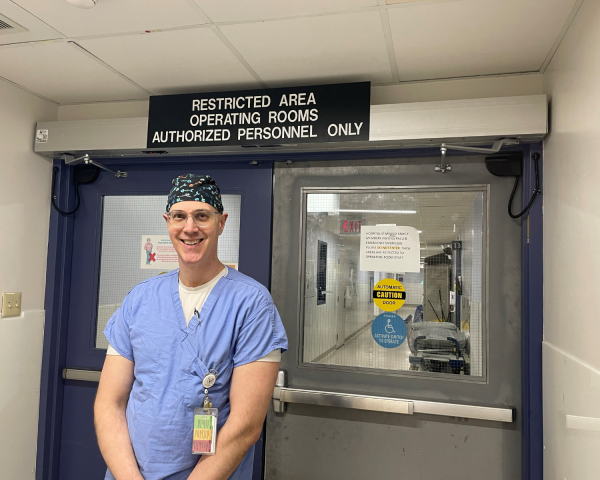
When Roger Stanzel was finishing his PhD in biology, he found himself at a professional crossroads.
“I didn’t see myself continuing strictly in research or pursuing a professorship,” he says. “I wanted a role where I was closer to patients.”
That search led him to perfusion – a specialized role most people don’t know about until they or a loved one needs heart, vascular or transplant surgery.
After completing his training at the Michener Institute in Toronto, Roger joined the Halifax team. Fifteen years later, he supports patients at the QEII Health Sciences Centre’s Victoria General and Halifax Infirmary sites, as well as the IWK Health Centre.
Perfusionists are the healthcare professionals who operate heart-lung machines during surgeries in which the heart and lungs must be temporarily bypassed.
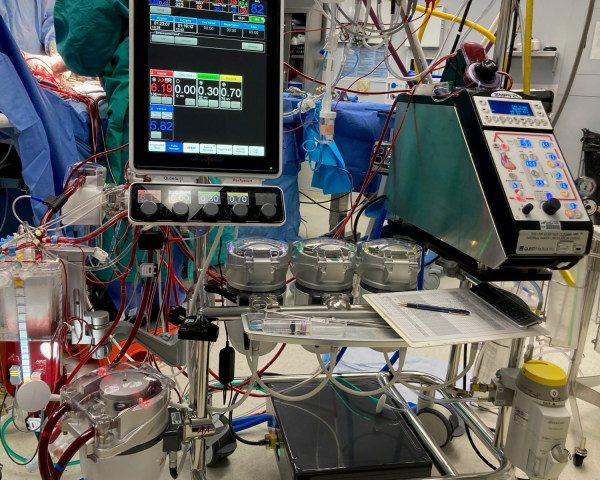
The heart-lung machine takes over circulation and oxygenation, allowing surgeons to operate on a still heart. It pumps blood through an artificial lung (oxygenator), adds oxygen, removes carbon dioxide and returns the blood to the body – temporarily doing the work of both organs.
Extracorporeal membrane oxygenation (ECMO) is a similar form of life support used outside of the operating room for patients with severe heart or lung failure, often for longer periods while the body recovers.
Perfusion is required for open-heart procedures and surgery for congenital heart defects. It is also used in major vascular surgeries, heart and liver transplants, emergency cardiopulmonary support during trauma or shock, and in providing ECMO.
"Our team supports over 1,100 surgeries each year," says Roger. “No two days are ever the same. You can come in for your shift, review the cases, and everything can change quickly. But we always remember that our patient is someone’s mother, father, child, friend or loved one.”
In the operating room, Roger maintains a unique vantage point. While the surgeon focusses on the operative field, he has a bird’s-eye view of the patient’s blood pressure, hemoglobin level, temperature, and the activity of the surgical team.
“My job is to monitor the patient but also to read the room and anticipate what is needed next. In complex surgeries, situations can change rapidly,” he says. “Through it all, perfusionists must stay calm and focused so we can make the appropriate move to best serve the patient and support the surgeon.”
That calm is essential. When the heart is stopped and circulation is maintained artificially, the surgical team depends on the perfusionist to keep the patient stable and ensure vital organ function continues.
“Perfusion is absolutely fundamental to cardiac surgery,” says Dr. Jeremy Wood, head of the Division of Cardiac Surgery at Nova Scotia Health and professor of surgery at Dalhousie University. “When we stop the heart to repair it, we rely completely on the perfusionist to maintain circulation and oxygen delivery to every organ. Their expertise and composure allow us to focus on the repair, knowing the patient is in capable hands.”
Perfusion makes modern cardiac surgery possible.
“If the heart is beating 80 beats per minute and a surgeon is trying to place tiny sutures, that’s technically challenging to complete,” says Roger. “The heart-lung machine allows the surgeons to stop the heart safely; and perfusion makes these procedures safe and keep the patient’s body functioning during surgery.”
Despite the intensity and responsibility of the role, patients may only briefly notice the perfusionist in the operating room, and Roger prefers it that way.
“I’m happy to work in the background and contribute to the success of surgery,” says Roger. "Perfusion is often unseen but essential. For patients undergoing complex cardiac or vascular surgery, that unseen presence can make all the difference.”
Perfusion programs are available at The Michener Institute, Université de Montréal and the British Columbia Institute of Technology (BCIT). Nova Scotia Health is actively recruiting perfusionists to join this highly specialized and collaborative team, supporting complex care for patients across Atlantic Canada.
Click here to learn more: Perfusionist - Cardiovascular Perfusion - Nova Scotia Health Career Opportunities - More Than Medicine.
Photo (top) of Roger Stanzel.