6 min read
Posted
Friday, February 27, 2026
at 1:33 PM AST
Posted by
Categories
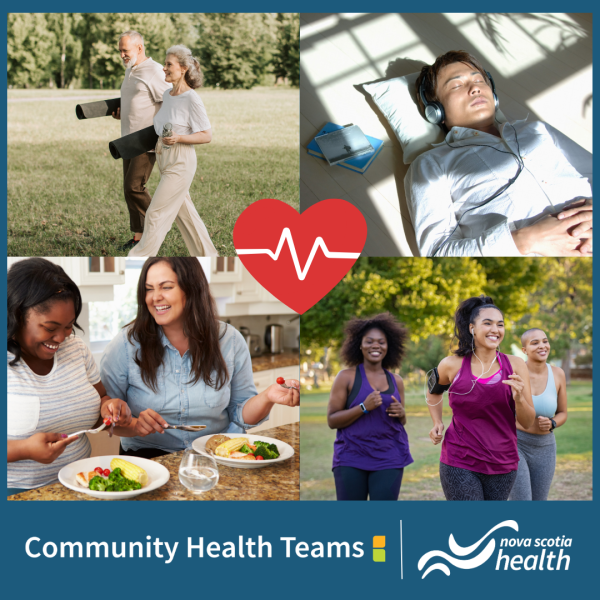
February is Heart Month – a time to focus on one of the most important muscles in our bodies. Heart health isn’t only shaped in hospitals or clinics. It’s influenced by the everyday choices we make. It’s how we eat, how we move, how we manage stress and how supported we feel along the way.
At Nova Scotia Health, Community Health Teams are helping people take practical, sustainable steps toward better heart health and overall wellness.
Community Health Teams are groups of healthcare professionals that often include dietitians, registered nurses, recreation therapists, physiotherapists, occupational therapists and social workers who offer free health and wellness programs. They provide both one-on-one meetings and group programs online and in-person. Programs cover topics like reducing health risks, healthy eating, physical activity, mental wellness, and youth and parenting, in partnership with IWK Health.
One of the important aspects of Community Health Teams is that people can self-refer, meaning no physician or nurse practitioner referral is needed.
For Giselle Davis, a wellness facilitator and physiotherapist working with Community Health Teams since 2018, the driving force behind the programming is prevention and empowerment.
“I enjoy my role with Community Health Teams because our work focuses on health promotion and chronic disease prevention and management in a way that isn’t always possible in more acute care settings. It’s rewarding to help clients build skills and confidence to improve their long-term health and stay independent for as long as possible,” Davis said.
Registered dietitian and wellness navigator Jill Conrod joined the Community Health Teams about five months ago, bringing a passion for prevention and supporting people in making sustainable health changes. “Community Health Teams are a wonderful resource because they focus on empowering clients, building practical skills, and reducing chronic disease risk through education and supportive care,” she said.
Several Community Health Teams programs specifically support heart health, including Heart Healthy Living, Take Charge of Your Stress and Exercise Essentials.
Heart Healthy Living is a two-week program that helps participants understand their personal risk factors, like cholesterol and blood pressure. “We focus on practical strategies such as heart-healthy eating, physical activity, stress management and daily habits that reduce the risk of heart disease and stroke,” Conrod said.
Take Charge of Your Stress addresses the impact of chronic stress on the heart, which can raise blood pressure, increase inflammation and disrupt blood sugar and cholesterol levels, while also contributing to poor sleep, inactivity and emotional eating. “Learning to manage stress isn’t just about feeling better, it’s an important step in protecting your heart,” said Conrod.
Exercise Essentials focuses on the key parts of an active lifestyle: cardio, strength training, stretching and balance. The program helps participants move more, build a personalized exercise plan and stay motivated long-term. “Regular physical activity strengthens your heart, improves blood pressure and cholesterol, supports healthy blood sugar and reduces your risk of heart disease and stroke,” said Davis.
Both Davis and Conrod emphasized these programs are not only for people already living with heart disease. They’re designed for both prevention and management.
“Everyone can benefit from the programs we offer,” said Davis.
Conrod concurred. “You do not need to have heart disease to participate. In fact, prevention is one of the most powerful steps you can take.”
A healthy heart is the foundation of our health. In addition to the risk of heart attacks and stroke, poor heart health is closely linked to other chronic conditions like diabetes, kidney disease and even cognitive decline. “The good news is that many of the habits that improve heart health – regular physical activity, balanced nutrition, stress management, good sleep – can also improve overall physical and mental well-being,” said Davis.
For those who feel nervous about signing up, both Conrod and Davis recognize that taking the first step and trying something new can feel intimidating. “Feeling nervous to sign up for programs is completely normal,” said Davis. “But there’s nothing to worry about. Our environment is supportive, not competitive, and the goal is to help people build confidence as well as improve their health. Often the hardest part is just walking through the door.”
Conrod shared a similar perspective. “Improving your health doesn’t require perfection or drastic changes. It starts with small, realistic steps in a safe and welcoming environment,” she said.
This Heart Month, the message from Nova Scotia Health’s Community Health Teams is clear: small changes add up.
“The best time to start taking care of your heart is today,” said Conrod. “Small changes really do add up over time, and we offer free programs and information to support you in making changes that fit your life and feel sustainable.”
To learn more about Community Health Teams and to sign up for one of their new spring and summer 2026 programs, visit: communityhealthteams.ca