4 min read
Posted
Monday, September 15, 2025
at 1:14 PM ADT
Posted by
Categories
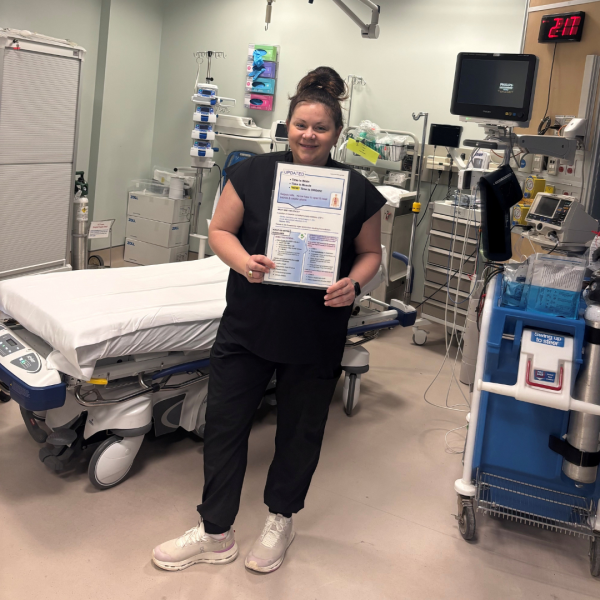
Kayla Dort has been a registered nurse in the emergency department at Cobequid Community Health Centre (CCHC) for nearly a decade. While recovering from an ankle injury, she stepped into a resource support role assisting her manager. That opportunity unexpectedly sparked her deeper involvement in sepsis improvement work and Kayla quickly became a driving force in shaping how Nova Scotia Health nurses identify and respond to sepsis.
Sepsis is the body’s extreme response to an infection. It is life-threatening. Without quick treatment, it can rapidly lead to tissues damage, organ failure and possibly death. Symptoms of sepsis can include feeling very unwell with fever or chills, fast breathing or heartbeat, confusion, extreme pain or skin that feels cold and sweaty.
Beginning in fall 2025, Nova Scotia Health will lead the country in rolling out its evidence-based Emergency Department Sepsis Improvement Package. This program empowers frontline nurses and paramedics to initiate life-saving treatment under an innovative new care directive.
Kayla played a key role in implementing the package in her emergency department. It is designed to help healthcare providers quickly recognize the signs of sepsis and act decisively. The package offers clear criteria for screening, and provides safe, timely effective care in busy emergency departments, including administering the first dose of antibiotics. With the new protocols in place, nurses and paramedics can now begin life-saving interventions sooner, reducing delays and improving patient outcomes.
For Kayla, the change has been one of the most rewarding experiences of her career. She has seen first-hand how empowering nurses to act quickly is saving lives and boosting confidence among newer colleagues. “We’re all working to our capacity and doing what’s best for patients,” she says. “This package gives nurses the confidence and protection to act, and we’re already seeing positive results.”
Kayla has also become a sepsis champion in her emergency department, supporting new nurses as they build confidence using the sepsis criteria. She provides structure, reassurance, and practical teaching that encourages them to trust the guidelines while developing their own clinical judgment. “If you’re unsure, ask,” she says. “But the package is right there—it walks you through every step.”
As part of an earlier quality project, Kayla and her colleagues looked for ways to raise awareness about the urgency of treating sepsis. Wanting a phrase that captured the time-sensitive nature of the condition, Kayla drew inspiration from well-known medical sayings like “time is brain” in stroke care and “time is muscle” in cardiac care. From this, the powerful message “Time is Organ” was created.
Kayla also helped design the visual logo for Sepsis. Time is Organ, working with her team to make sure it conveyed both urgency and clarity. The logo has since become a cornerstone of sepsis awareness at Nova Scotia Health.
Her leadership and creativity, from bedside practice to awareness campaign design, are leaving a long-term impact on how sepsis is recognized, treated, and understood across Nova Scotia Health.
September is Sepsis Awareness Month, and Sept. 13 is World Sepsis Day. Nova Scotia Health has made sepsis care a top priority, with a strong commitment to early detection and timely treatment.
Photo of Kayla Dort.