Jump to:
- Where is robotic surgery available?
- How can I have robotic-assisted surgery?
- Benefits for patients
- Benefits for the healthcare system
- Surgeries that may be offered with robotic assistance
- Growth of robotic surgery in Nova Scotia
- Centre of Excellence in Robotic Surgery
- Information for Health Care providers
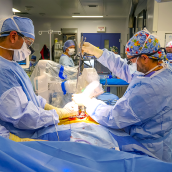
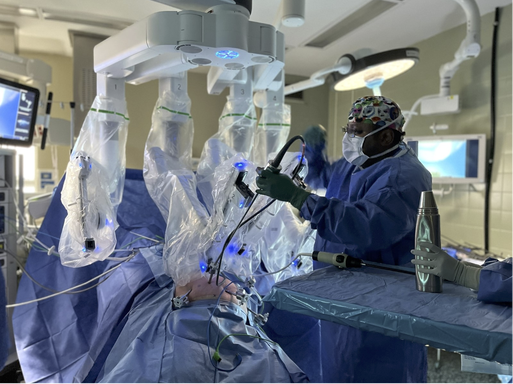
Nova Scotia Health offers some surgeries with the assistance of advanced robotic technology at the QEII Health Sciences Centre and Dartmouth General Hospital.
Robotics-assisted surgery allows surgeons to perform highly precise, minimally invasive procedures using specialized robotic systems that are controlled by the surgeon throughout the operation.
Research and quality improvement work are underway to continue evaluating the benefits of robotic surgery for patients and the healthcare system and to support future program growth.
These efforts will be supported through the Nova Scotia Centre of Excellence in Robotics, which is being established with generous support from the QEII Foundation and their donors.
The province-wide initiative will support coordinated approaches to robotic surgery across the health system.
Where is robotic surgery available?
How can I have robotic-assisted surgery?
Robotics-assisted surgeries are currently available through some surgeons, for some surgeries at the QEII Health Science Centre in Halifax and the Dartmouth General Hospital.
Many surgeries continue to be delivered without robotics-assistance, using proven surgical approaches and minimally-invasive surgery options wherever possible.
It is important that patients make an informed choice about their surgery.
Your surgeon will discuss surgery options with you, including if they are able to offer a robotics-assisted option for the surgery they are providing.
Benefits for patients
Robotic surgery may offer benefits such as:
- smaller incisions
- less damage to surrounding tissues
- less blood loss
- reduced pain after surgery
- shorter hospital stays
- faster recovery and return to normal activities
- lower risk of some complications
Benefits vary depending on the type of surgery and the individual patient.
Benefits for the healthcare system
Robotic surgery can also help improve how surgical care is delivered across the health system by:
- reducing demand on hospital beds through shorter lengths of stay
- reducing some re-admissions and follow-up hospital care
- improving the efficiency of operating room time and surgical workflows
- supporting more efficient use of resources such as blood products and pain medications
These benefits help create additional capacity so more patients can receive surgery and other important care.
Surgeries that may be offered with robotic assistance
Some Nova Scotia Health surgeons currently use robotic systems for selected procedures in several specialties, including various cancer surgeries. Procedures may include:
- urology (prostate, kidney, testes and bladder surgery)
- gynecologic cancer surgery
- colorectal surgery
- hepatobiliary surgery (liver, pancreas, and bile ducts)
- thoracic surgery (lungs)
- otolaryngology (ear, nose, and throat)
- neurosurgery (brain)
- spinal surgery
- orthopedic joint replacement surgery
- ↑ Top
Growth of robotic surgery in Nova Scotia
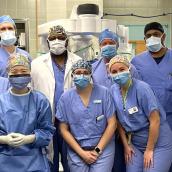
Since launching its first robotic surgery program in 2019, Nova Scotia Health has expanded robotic surgery to multiple specialties.
Nearly 4,000 robotic-assisted procedures have been completed across the program, and the number of surgeons offering robotic surgery has grown from three to more than 30. (data as of July 2026)
This growth has been supported by investments from Nova Scotia Health and generous support from the QEII Foundation and the Dartmouth General Hospital Foundation.
Centre of Excellence in Robotic Surgery
With the generous support of the QEII Foundation and their donors, Nova Scotia Health is now leading efforts to develop a Centre of Excellence in Robotic Surgery at the QEII Health Sciences Centre.
The initiative is intended to support:
- education and training
- research and innovation
- quality improvement
- data and outcomes evaluation
- collaboration across the province
The goal is to continue improving access to high-quality, minimally invasive surgical care for Nova Scotians.
Information for Health Care providers
Please continue to refer patients using the usual referral pathways.
If a robotic-assisted approach may be appropriate, the receiving surgeon will discuss available surgical options with the patient.
News and Stories